
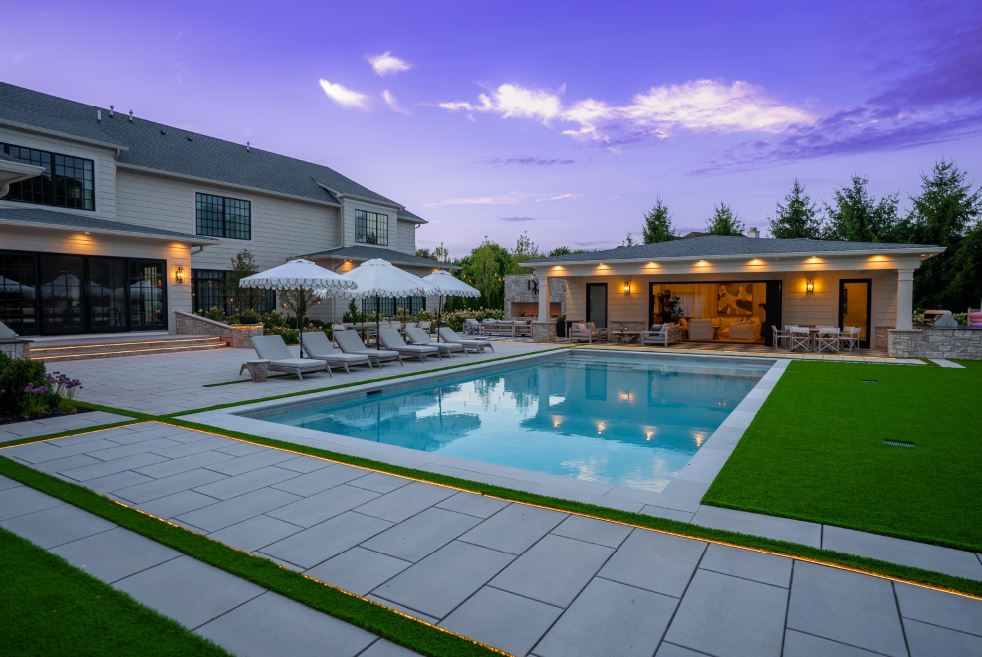
A swimming pool can become the centerpiece of an exceptional outdoor living environment—but the pool itself is only one part of the experience. The surrounding landscape determines whether the space feels inviting, private, comfortable, functional, and connected to the rest of the property.
The most successful pool landscapes are not created by simply installing a pool and adding plants around the finished deck. They begin with a thoughtful evaluation of the entire property, including its architecture, topography, drainage, zoning limitations, sunlight, existing vegetation, and the way the homeowners want to live outdoors.
From there, the pool, plantings, hardscaping, lighting, privacy features, shade structures, and outdoor amenities can be designed as one cohesive environment.
In Northern New Jersey, pool landscapes must also perform through intense summer heat, heavy rain, changing sun exposure, frequent entertaining, and regular foot traffic. A beautiful design should look impressive when the pool opens in late spring and remain polished, healthy, and enjoyable through Labor Day and well into the fall.
Here are some of the most important considerations when designing a pool landscape that stays beautiful all summer.
Begin With a Complete Pool Landscape Plan
Pool landscaping should be approached as part of a larger landscape master plan. Before selecting plants, patio materials, or outdoor furniture, consider how the pool area will connect to the home, lawn, gardens, outdoor kitchen, walkways, and surrounding property.
A well-developed pool landscape plan should answer important questions:
- How will people move from the house to the pool?
- Where will guests sit, dine, and gather?
- Which areas receive full sun or afternoon shade?
- Where is privacy most important?
- How will stormwater move through the property?
- Where will pool equipment, towels, furniture, and accessories be stored?
- How will the pool landscape appear when viewed from inside the home?
- Will the layout remain comfortable when the family is entertaining?
Thinking about the entire outdoor environment helps prevent disconnected features, awkward pathways, insufficient seating, drainage problems, and plantings that eventually outgrow their locations.
It also allows the pool to feel like a natural extension of the home rather than a separate feature placed in the backyard.
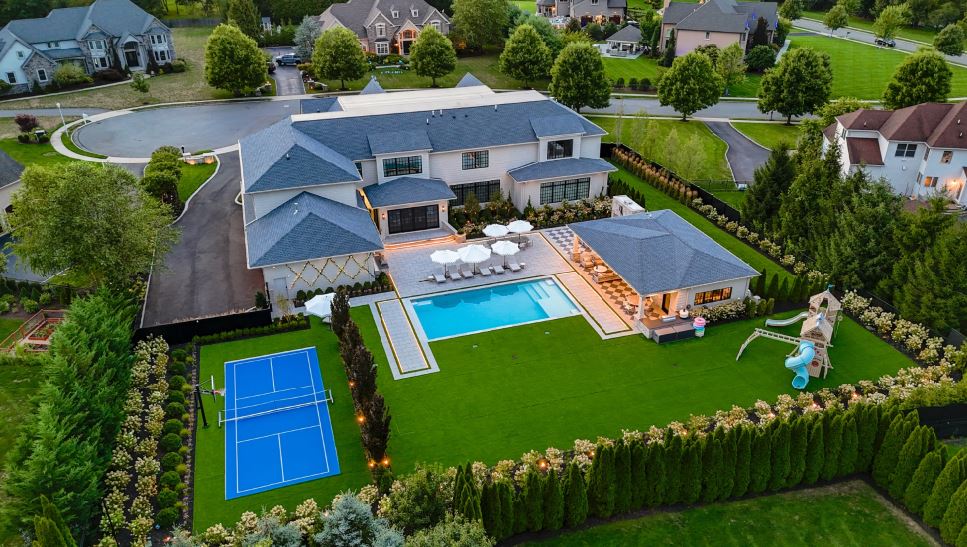
Make Sure the Dream Can Be Approved and Built
If you are still in the planning stages of adding pool to your great outdoors, before becoming too attached to a particular pool shape, location, or collection of outdoor amenities, homeowners should determine what can legally and practically be built on the property.
Municipal requirements can vary considerably from one community to another. Homeowners in North Caldwell, West Caldwell, Essex Fells, Glen Ridge, Montclair, Upper Montclair, Verona, Roseland, Livingston, Short Hills, Chatham, Madison, Florham Park, Morristown, and other Northern New Jersey communities may face different zoning, engineering, drainage, and construction requirements.
A preliminary property review may need to consider:
- Required setbacks from property lines and existing structures
- Maximum lot or impervious-surface coverage
- Pool fencing, gates, alarms, and safety requirements
- Grading and stormwater-management needs
- Retaining walls and changes in elevation
- Easements, wetlands, flood-hazard areas, or steep slopes
- Existing utilities, septic systems, wells, or overhead wires
- Tree-removal restrictions
- Pool houses, pergolas, outdoor kitchens, and accessory structures
- Zoning, building, electrical, and plumbing approvals
These considerations affect more than the pool itself. A property may appear to have enough room for a large swimming pool, but the proposed patio, walkways, retaining walls, outdoor kitchen, pool house, and other improvements may affect allowable coverage or required setbacks.
This is why pool planning should begin with the entire property rather than a pool selected in isolation.
An experienced landscape design team can evaluate the site, identify potential restrictions, coordinate with the appropriate professionals, and develop a design that reflects both the homeowner’s vision and the realities of the property.
Addressing compliance and site feasibility early can help prevent expensive redesigns, delays, and disappointment later in the process.
Choose Plants That Can Handle Poolside Conditions
Plants around a swimming pool face conditions that can be more demanding than those in other areas of the landscape. They may be exposed to reflected heat, intense sunlight, occasional splashing, limited planting space, and increased activity.
The right plant palette should combine visual interest with durability.
Depending on the style of the home and property, pool landscaping may include ornamental grasses, flowering perennials, evergreen shrubs, small ornamental trees, groundcovers, and carefully placed specimen plants.
Plants should always be chosen based on their mature size—not simply how they look when purchased.
A shrub that appears compact when installed may eventually block a walkway, crowd the pool deck, interfere with sightlines, or obstruct landscape lighting. Trees with aggressive roots may also create problems when planted too close to patios, walls, or pool structures.
It is generally wise to avoid plants that produce excessive litter, thorns, invasive roots, or large quantities of fruit and seed near the water.
Thoughtful plant selection can reduce maintenance while helping the pool area remain cleaner, safer, and more comfortable.
Create Color That Lasts Throughout the Season
A pool landscape should not reach its visual peak for two weeks and then fade for the remainder of the summer.
Layering plants with different flowering periods helps maintain color and interest from late spring through fall. Early-season flowers can welcome the beginning of pool season, while summer-blooming perennials and shrubs provide color during the months when the area receives the most use.
Late-season plants can carry the landscape into September and October.
Foliage is equally important. Plants with contrasting shades of green, variegated leaves, distinctive textures, and architectural forms can keep the landscape attractive even when fewer plants are blooming.
A strong planting design combines seasonal flowers with dependable structure. Evergreens, ornamental grasses, shrubs, and small trees create a framework that keeps the pool landscape feeling established and complete.

Create Privacy Without Making the Pool Feel Enclosed
Privacy is one of the most common goals of pool landscaping, particularly in established Northern New Jersey neighborhoods where homes may be relatively close together.
However, creating privacy does not necessarily mean surrounding the pool with a solid wall of identical evergreens.
A more natural approach uses layers of plant material at varying heights. Evergreen screening can provide year-round coverage, while flowering shrubs, ornamental trees, and perennials soften the view and add seasonal interest.
Strategic placement is often more effective than planting a continuous barrier.
The landscape design should identify specific sightlines from neighboring homes, streets, and nearby gathering areas. Screening those views can provide privacy while preserving sunlight, airflow, and a feeling of openness.
Pergolas, decorative fencing, masonry walls, trellises, and pool houses can also be integrated with plantings to improve privacy while supporting the architectural character of the property.
Select Hardscaping for Beauty, Comfort, and Safety
The pool deck has a major effect on both the appearance and usability of the space.
Natural stone, concrete pavers, porcelain, and other paving materials offer different colors, textures, maintenance requirements, and performance characteristics.
Appearance matters, but so do practical considerations.
Poolside surfaces should provide appropriate traction, withstand repeated exposure to water, and remain as comfortable as possible underfoot during hot summer weather.
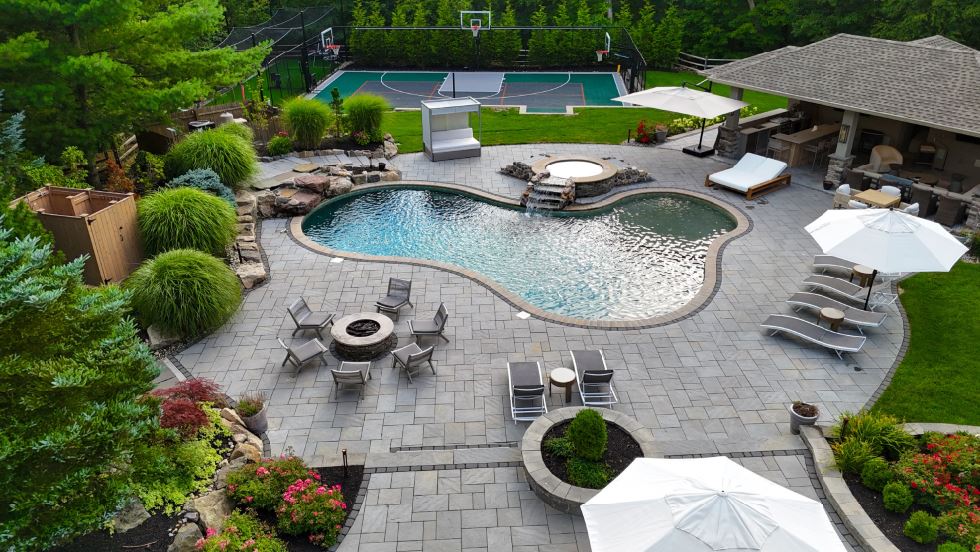
The scale and layout of the deck are equally important. There should be adequate room for lounge chairs, dining furniture, umbrellas, planters, and comfortable circulation without making the area feel overcrowded.
Transitions between materials should also feel intentional. Pool decking, patios, walkways, retaining walls, steps, and other masonry elements should complement one another and relate to the architecture of the home.
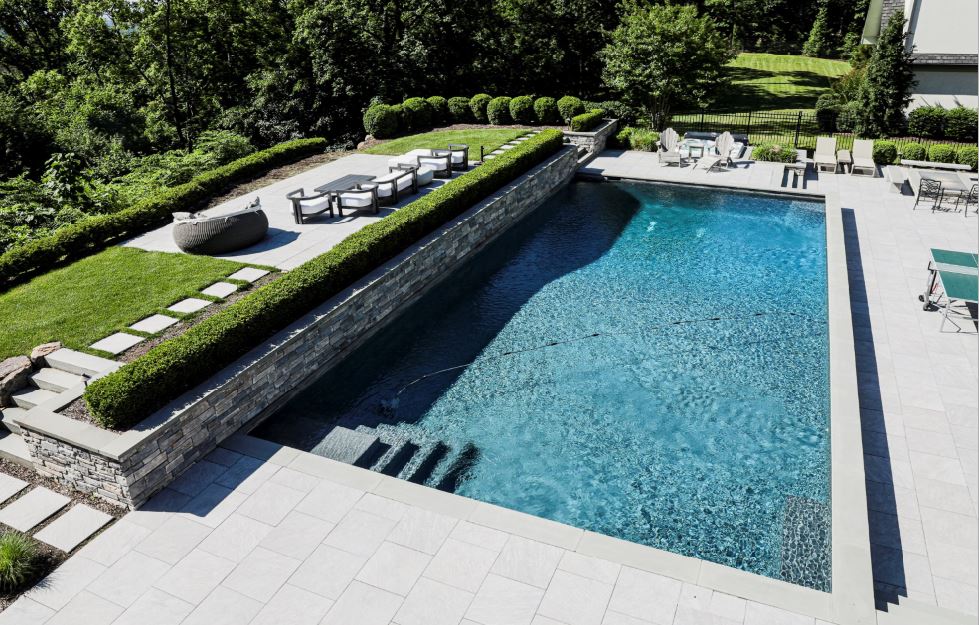
Plan for Shade and Summer Comfort
Even homeowners who enjoy spending time in the sun need places to cool down.
Without adequate shade, a pool area can become uncomfortable during the hottest part of the afternoon. Shade may be created with pergolas, pavilions, umbrellas, strategically positioned trees, or roofed outdoor living structures.
The right solution depends on the property, available space, sun exposure, and how the family plans to use the area.
A shaded lounge or dining space makes the pool environment more versatile. It creates a comfortable location for meals, conversation, reading, and supervising children without remaining in direct sunlight.
Outdoor kitchens, beverage stations, refrigerators, televisions, fireplaces, and comfortable seating can further transform the property from a simple pool deck into a complete summer destination.
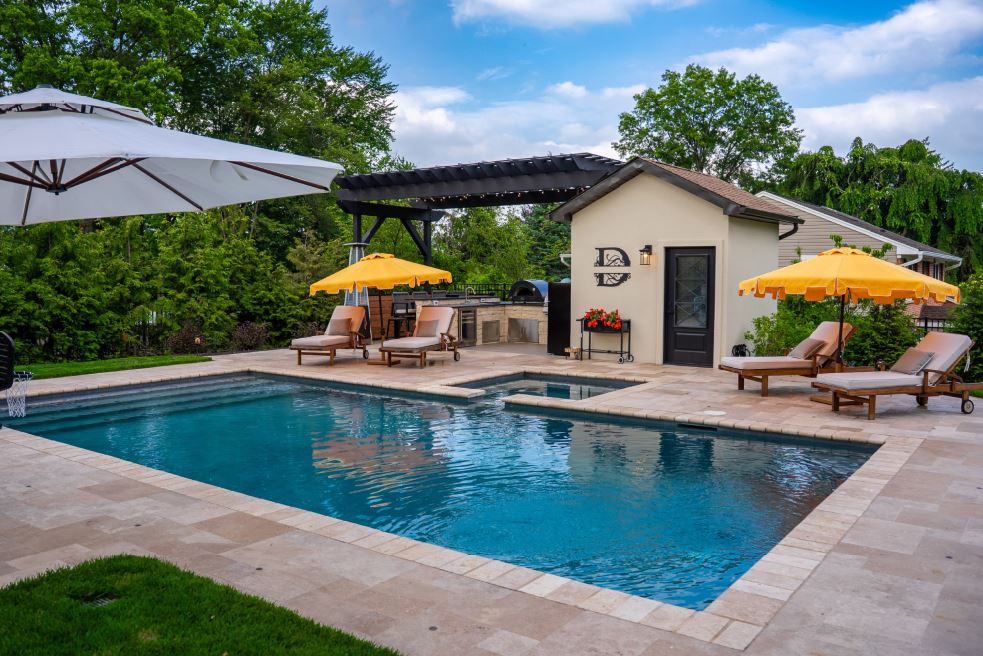
Do Not Overlook Grading and Drainage
Water should remain in the pool—not collect around the deck, planting beds, lawn, or foundation.
Proper grading and drainage are essential to the long-term performance of a pool landscape. The surrounding property must be shaped so stormwater moves safely away from structures and usable spaces without causing erosion or oversaturating plantings.
Drainage planning may involve surface grading, channel drains, catch basins, underground piping, permeable materials, or other property-specific solutions.
These elements should be considered during the design process rather than added after a problem develops.
Correct drainage protects plants, hardscaping, lawn areas, and nearby structures while making the pool environment safer and more enjoyable after summer storms.
Extend the Experience With Landscape Lighting
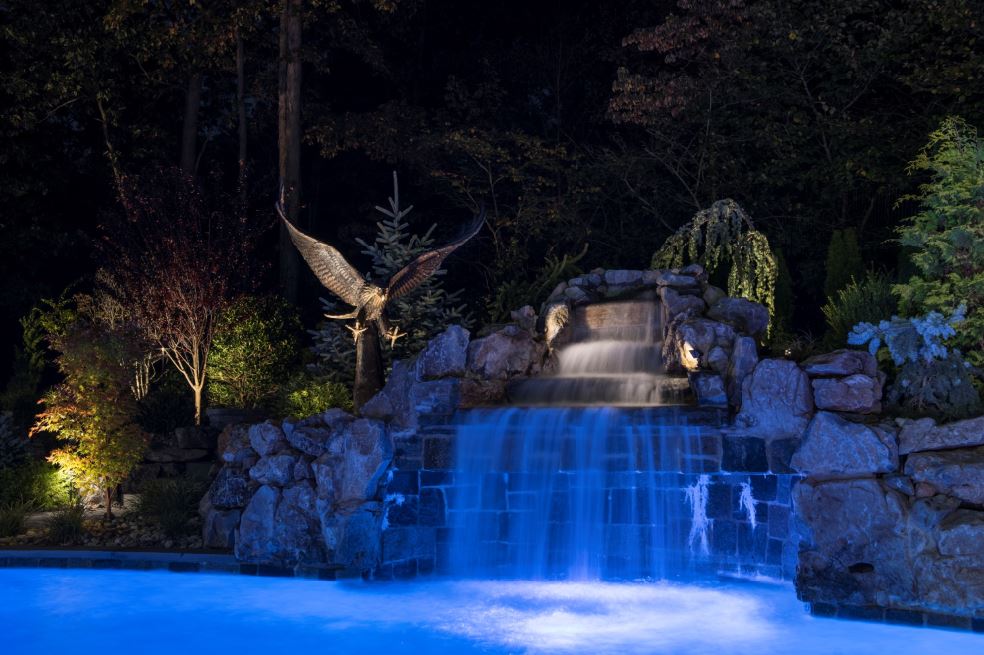
Professionally designed landscape lighting allows the pool environment to remain functional and inviting after sunset.
Path lights and step lights improve visibility along walkways and elevation changes. Subtle lighting can highlight specimen trees, ornamental plantings, masonry walls, and architectural details.
Lighting near outdoor kitchens, dining spaces, and seating areas makes evening entertaining more comfortable.
The goal is not to flood the property with excessive brightness. A layered lighting plan creates depth, guides movement, and produces a warm atmosphere without overwhelming the landscape.
When pool lighting and landscape lighting are designed together, reflections on the water can become one of the most striking nighttime features of the property.
Protect the Design With Consistent Maintenance
Even the most thoughtfully designed pool landscape requires attentive care.
Summer heat, rapid plant growth, weeds, insects, storms, and frequent use can quickly affect its appearance.
Regular pruning helps plants retain their intended shapes and prevents them from crowding patios and walkways. Proper irrigation keeps plantings healthy without oversaturating the pool deck or surrounding lawn.
Seasonal fertilization, weed control, edging, cleanup, and plant-health monitoring help preserve the original design.
A professional landscape maintenance program should be based on the needs of the individual property rather than a one-size-fits-all schedule.
When the landscape design and maintenance teams understand how the property was intended to look, they can protect its structure, balance, and long-term value.
Create a Pool Landscape That Belongs to the Property
The most successful pool landscapes feel like natural extensions of the home. The plantings, materials, structures, lighting, and outdoor amenities work together instead of competing for attention.
Achieving that result requires more than selecting attractive plants or installing a larger pool deck. It requires an understanding of landscape architecture, masonry, drainage, horticulture, site planning, lighting, construction, and long-term property care.
From evaluating zoning and site conditions to coordinating the pool, hardscaping, plantings, drainage, lighting, and outdoor amenities, Sponzilli Landscape Group helps homeowners develop a plan with both creative vision and practical direction.
The goal is not simply to imagine a beautiful backyard. It is to create a pool landscape that can be properly approved, expertly built, and enjoyed for many summers to come.
Sponzilli Landscape Group designs and builds distinctive pool landscapes and outdoor living environments for homeowners throughout North Caldwell, West Caldwell, Essex Fells, Glen Ridge, Montclair, Upper Montclair, Verona, Roseland, and surrounding communities in Essex County, Morris County, and Northern New Jersey.
Whether you are planning a new swimming pool, renovating an existing pool area, or reimagining your entire backyard, contact Sponzilli Landscape Group to begin creating an outdoor environment designed around your home, property, and lifestyle.