
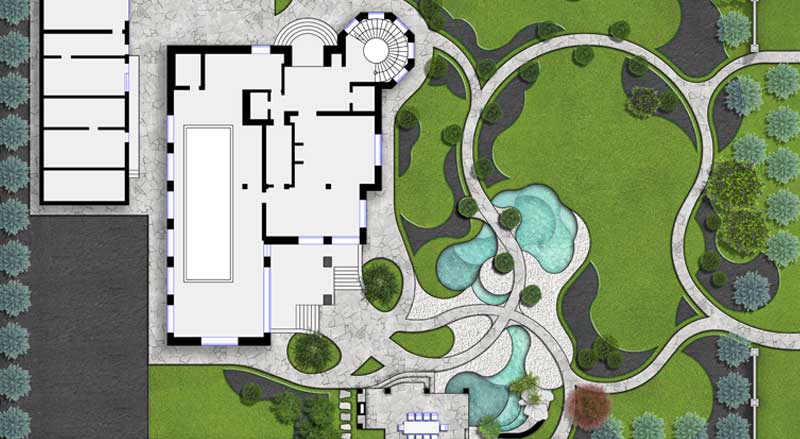
When homeowners imagine a beautiful landscape, they often think about patios, gardens, lawns, and outdoor living spaces. While these visible elements are important, the true success of any landscape begins below the surface. Proper grading, drainage, and site engineering form the foundation that allows every other feature—from planting beds to hardscape—to perform properly for years to come.
Successful landscape projects rarely begin with construction alone. They begin with thoughtful planning that considers how water moves across a property, how soil conditions affect plant health, and how elevation changes influence drainage. In many cases, this level of planning begins with a comprehensive design strategy.
Homeowners considering significant improvements often benefit from starting with a Landscape Master Plan that outlines how their property will evolve over time and ensures that every phase of construction works together. If you’d like to learn more about this approach, you can explore our article on The Value of a Landscape Master Plan Before You Build.
In Northern New Jersey communities such as North Caldwell, Livingston, Essex Fells, Montclair, Short Hills, and throughout Morris County, properties often include natural slopes, mature trees, and varied soil conditions. These factors make professional planning essential before any landscape construction begins. Without careful grading and drainage design, even the most beautiful landscape installations can suffer from standing water, erosion, foundation issues, and premature deterioration.
At Sponzilli Landscape Group, successful projects always begin with a careful evaluation of how water moves across a property.
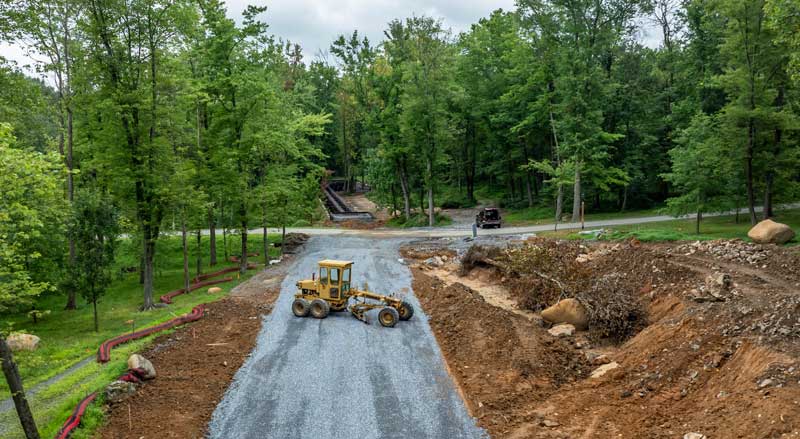
Why Proper Grading Matters
Grading refers to shaping the land to control the direction and movement of water. Even subtle adjustments to the slope of a property can dramatically affect drainage performance and the health of the landscape.
A well-designed grading plan ensures that water flows away from a home’s foundation and toward appropriate drainage areas. This reduces the risk of basement flooding and protects the structure while preventing water from pooling in lawns, garden beds, or paved surfaces.
In many residential landscapes throughout Essex County and Morris County, improper grading can lead to several common problems:
- Water pooling near foundations or basements
- Standing water in lawns and garden beds
- Soil erosion during heavy storms
- Uneven lawns that remain muddy for long periods
- Hardscape surfaces shifting or settling
- Damage to patios, walkways, and retaining walls
- Damage to plant roots caused by excessive moisture
Professional grading corrects these issues while creating a stable base for patios, walkways, retaining walls, and planting areas.
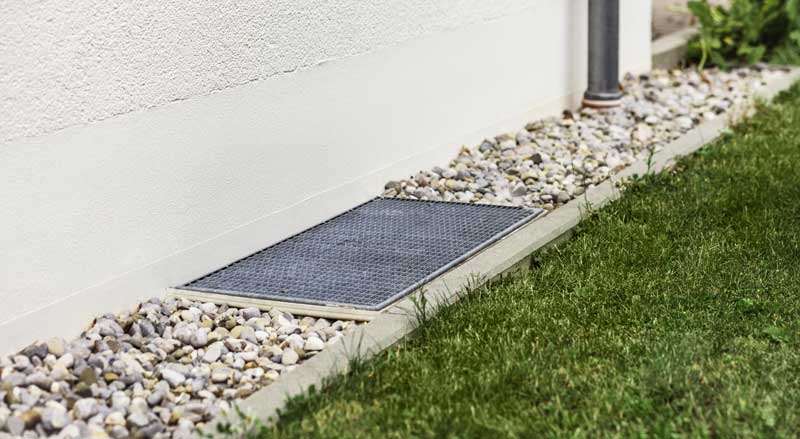
Managing Stormwater Through Effective Drainage Design
New Jersey regularly experiences intense rain events, especially during spring and summer storms. Without proper drainage systems, large volumes of stormwater can overwhelm a property.
A thoughtfully designed drainage system manages runoff by directing water away from structures and toward areas where it can safely disperse or be absorbed into the soil.
Depending on the layout of a property, drainage solutions may include:
- Subsurface drainage systems that collect and redirect excess water
- French drains are designed to intercept groundwater before it reaches foundations
- Catch basins and channel drains that collect runoff from paved areas
- Dry wells that allow water to slowly infiltrate into the soil
- Swales or grading adjustments that guide water across the landscape naturally
In many situations, subsurface drainage systems play a critical role in protecting lawns, plantings, and outdoor living areas from persistent moisture problems. You can learn more about how these systems work and the advantages they provide in our article on Benefits of Subsurface Drainage Systems.
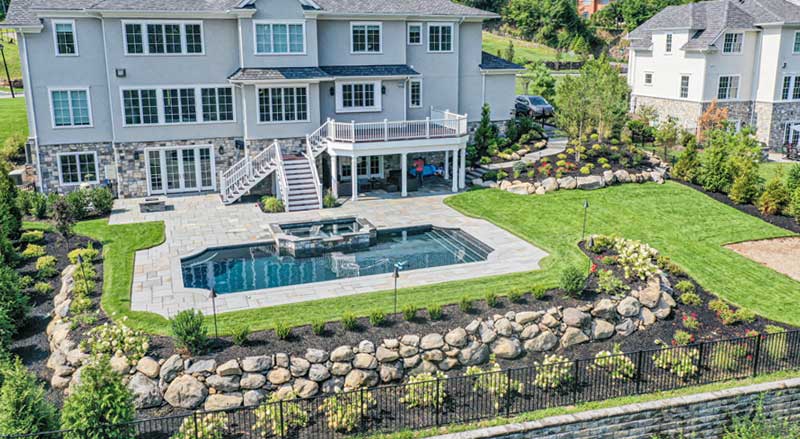
Site Engineering: Planning the Landscape as a Complete System
Site engineering takes grading and drainage one step further by evaluating the entire property as a connected system. This process considers soil conditions, elevation changes, existing structures, and how future landscape features will interact with the land.
For example, when installing a patio or outdoor kitchen, the design must account for water runoff from the surrounding surfaces. Without proper engineering, water can collect beneath pavers or natural stone, leading to settling, cracking, or frost damage during winter.
Similarly, planting beds must be designed with appropriate soil conditions and drainage to ensure healthy root development.
At Sponzilli Landscape Group, site engineering is often integrated into the landscape planning process to ensure every feature works together seamlessly. This approach helps prevent costly issues that can arise when drainage and grading are overlooked.
Protecting Hardscape Investments
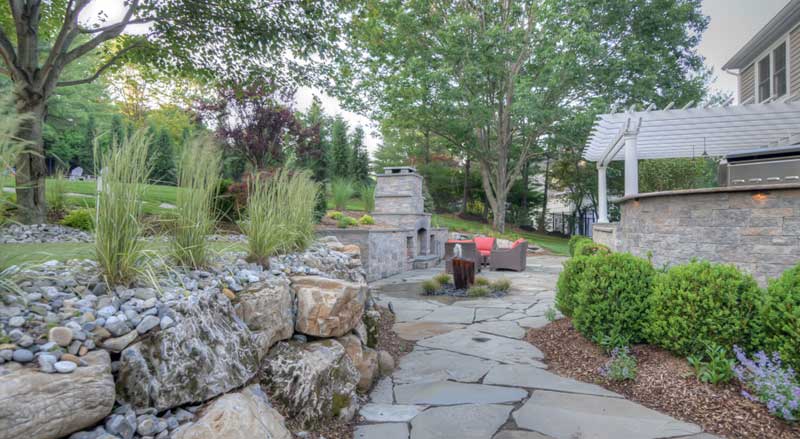
High-end hardscape features such as natural stone patios, walkways, retaining walls, and outdoor living areas represent a significant investment for homeowners. These features must be supported by a properly prepared base and adequate drainage systems.
Water that collects beneath hardscape surfaces can cause materials to shift or settle over time. In climates like Northern New Jersey, freeze-thaw cycles can further accelerate damage when trapped moisture expands during colder months.
Professional grading and drainage planning help ensure that these outdoor living spaces remain stable, safe, and visually appealing for many years.
Creating Healthier Planting Environments
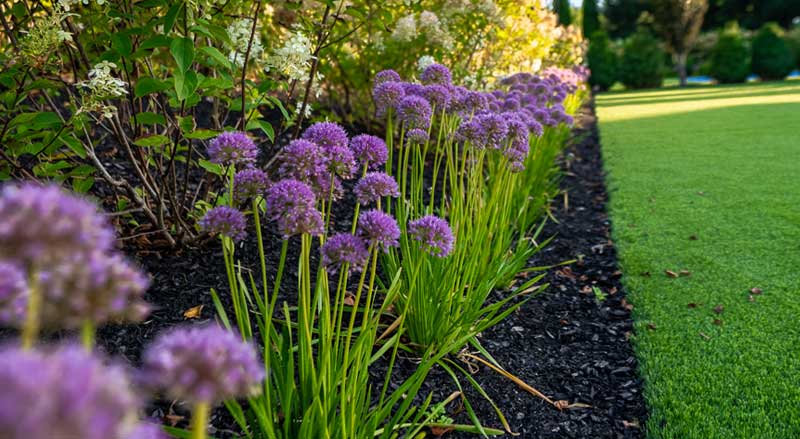
Plants, trees, and shrubs thrive when they receive the right balance of water and oxygen in the soil. Too much moisture can suffocate roots, while poor drainage can encourage disease and weaken plant health.
A well-designed drainage plan creates ideal soil conditions by preventing waterlogged areas while allowing necessary moisture to reach the root zone. This helps trees and plantings establish strong root systems and grow more vigorously.
Thoughtful grading also allows landscape designers to create subtle variations in elevation that enhance planting beds, garden areas, and lawn transitions throughout the property.
Addressing Drainage Issues Before They Become Expensive Problems
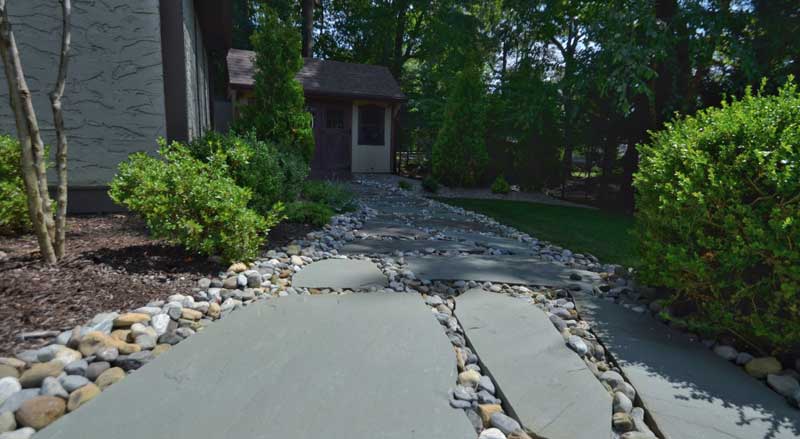
Many homeowners only recognize drainage problems after visible damage occurs. Persistent puddles, eroded soil, and basement moisture are often signs that water is not being properly managed.
By addressing grading and drainage during the planning phase of a landscape project, homeowners can avoid costly repairs and structural issues later.
This proactive approach is particularly important for properties with:
- Sloping terrain
- Clay-heavy soils common in parts of Northern New Jersey
- Older drainage systems that may no longer function effectively
- Expanding outdoor living spaces that alter water flow
Professional evaluation ensures that water management solutions are integrated into the overall design rather than treated as an afterthought.

Compliance and Responsible Landscape Construction
Drainage and grading work must also comply with local regulations and environmental considerations. Municipal requirements often govern how stormwater is managed on residential properties, particularly when significant grading or construction is involved.
Every year we install landscape projects in North Caldwell, West Caldwell, Fairfield, Essex Fells, Glen Ridge, Montclair, Upper Montclair, Verona, Roseland, Livingston, Short Hills, Montville, and Towaco…and other neighboring communities in Morris and Essex Counties…. And every one of these municipalities or cities has important ordinances and regulations that impact landscape installation and construction.
Experienced landscape professionals understand these requirements and design projects that meet local standards while protecting nearby properties and waterways from excessive runoff.
This responsible approach helps maintain environmental balance while ensuring projects proceed smoothly through any required permitting or approvals.

Integrating Engineering with Landscape Design
At Sponzilli Landscape Group, the most successful landscapes are created when design vision and technical expertise work together. Grading, drainage, and engineering considerations are incorporated during the early stages of landscape planning rather than treated as secondary concerns.
This integrated approach allows designers to create outdoor spaces that are both visually compelling and structurally reliable.
Examples include:
- Terraced gardens that stabilize slopes
- Retaining walls that create usable outdoor rooms
- Strategic grading that guides water naturally through the landscape
- Plant selections that match soil moisture conditions
By carefully aligning aesthetics with engineering, the landscape becomes a cohesive environment where every element supports the overall design.
The Foundation of a Successful Landscape
A beautiful landscape is more than what appears on the surface. Behind every successful outdoor space is careful planning that manages water, stabilizes soil, and supports long-term durability.
By prioritizing grading, drainage, and site engineering from the beginning, homeowners can protect their property, improve plant health, and ensure their outdoor living investments perform exactly as intended. These foundational elements work together to create landscapes that remain functional, attractive, and structurally sound for many years.
For homeowners planning improvements to their property, addressing these factors early can significantly improve the long-term success of the landscape. Starting with a comprehensive design strategy—such as a Landscape Master Plan—helps ensure grading, drainage, hardscaping, and planting design are all thoughtfully coordinated from the beginning.
If you’re considering a landscape project or experiencing drainage issues on your property, the experienced team at Sponzilli Landscape Group can evaluate your site conditions and recommend solutions that support both beauty and long-term performance.
You can also explore additional insights from our team:
These resources provide helpful guidance for homeowners looking to make informed decisions about landscape planning, water management, and long-term property performance throughout Essex County, Morris County, and Northern New Jersey.
Sponzilli Landscape Group
If you are planning a landscape improvement project in Essex County or Morris County, begin with a team that understands both the art and the engineering of landscape design. The professionals at Sponzilli Landscape Group create outdoor environments that are not only visually stunning but carefully engineered for long-term performance and lasting value.